How It Works
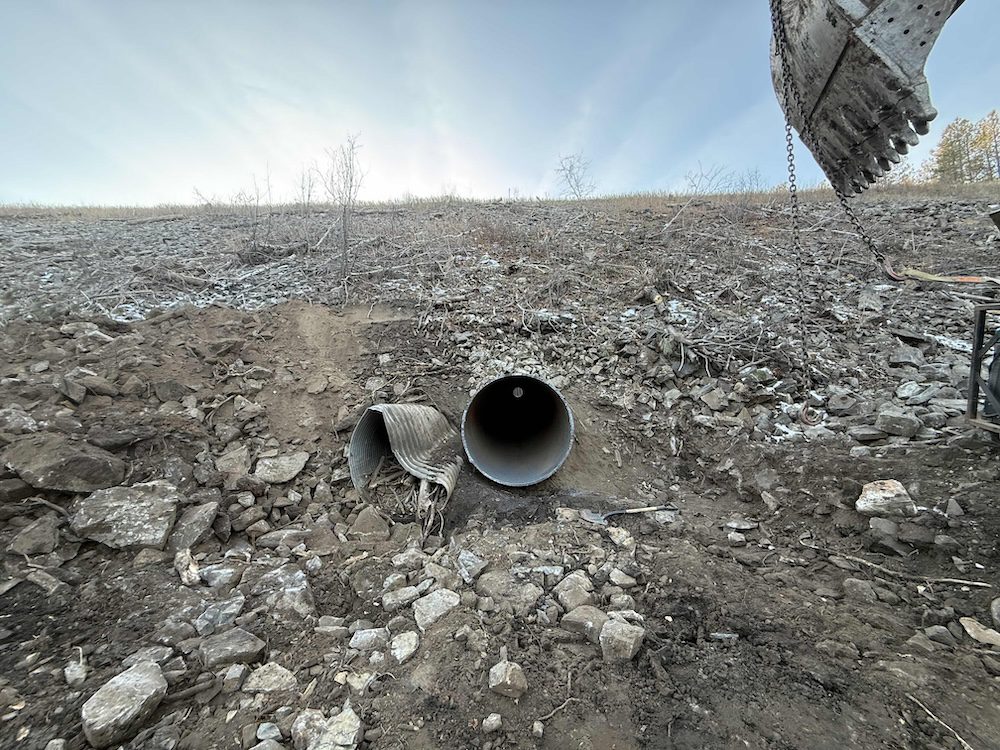
Pipe ramming is a trenchless installation method that uses a pneumatic hammer to drive steel casing pipes horizontally through the ground without disturbing the surface. It’s ideal for utility crossings, culvert installations, and projects beneath roads, railways, or other sensitive structures—especially in mixed or unstable soils. The method offers a durable, low-impact alternative to open-cut excavation and delivers predictable results across a wide range of conditions.
Benefits
- Minimal surface disruption – installs casing under roads and railways without excavation or traffic interruption.
- Versatile across soil types – effective in sand, gravel, cobbles, and high groundwater, excluding solid rock.
- Controlled installation – soil plug prevents ground loss and settlement; grade monitored throughout.
- Adaptable and precise – can be paired with Guided Boring for longer runs or tighter alignment tolerances.
- Proven and efficient – fast setup, strong production rates.
Applications & Technical Details
- Common uses:
- Utility crossings beneath highways, railways, and waterways.
- Culvert and casing installations for pipelines and drainage systems.
- Support for critical infrastructure where maintaining ground stability is essential.
- Pipe types: Smooth-walled steel casings from 12” O.D. to 144” O.D.
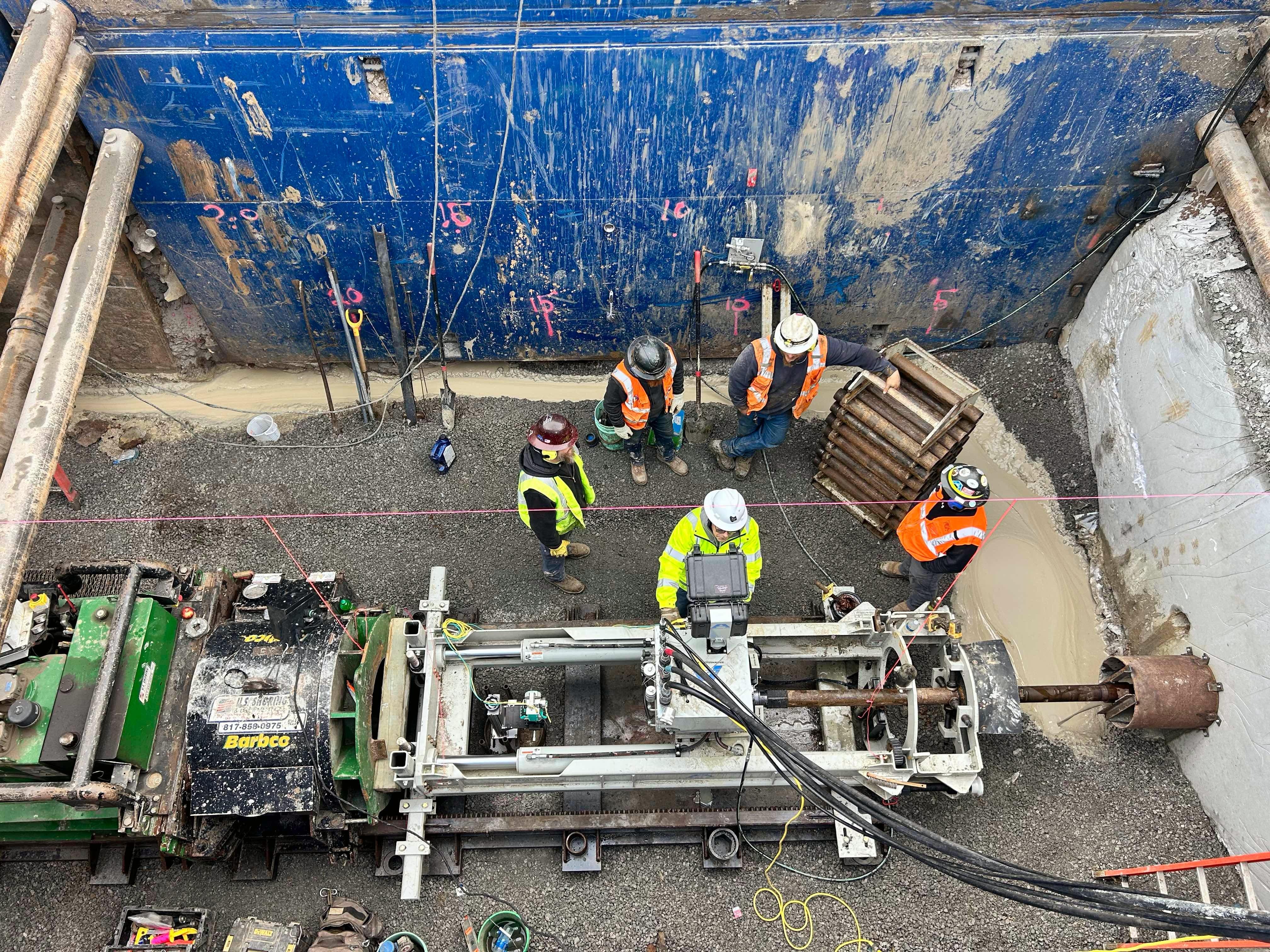
- Drive lengths: Typically 25–300 ft; up to 500 ft with Guided Boring Method (GBM).
- Soil suitability: Performs well in most soils except rock; particularly effective in flowing soils and high groundwater areas.
- Process details:
- Air-powered ramming tool drives casing sections in sequence.
- Drive shoes reinforce the leading edge to prevent deformation.
- Grade checked via water levels and survey instruments.
- Spoil removed using augers, air, or water jets after or during installation.
- Guided systems available for laser or optical alignment when precision is critical.