How It Works
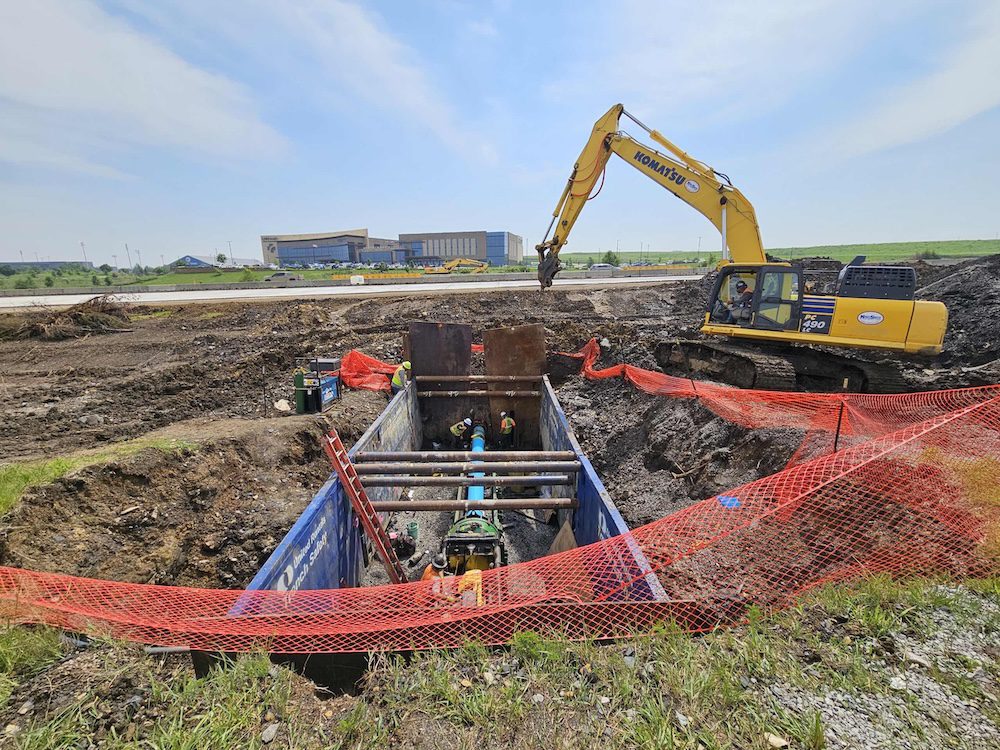
Guided Boring and Guided Pipe Ramming merge pilot-tube precision with the robustness of auger boring or pneumatic ramming. This hybrid approach delivers high accuracy, speed, and minimal surface impact—making it ideal for challenging underground crossings across diverse ground conditions and installation methods.
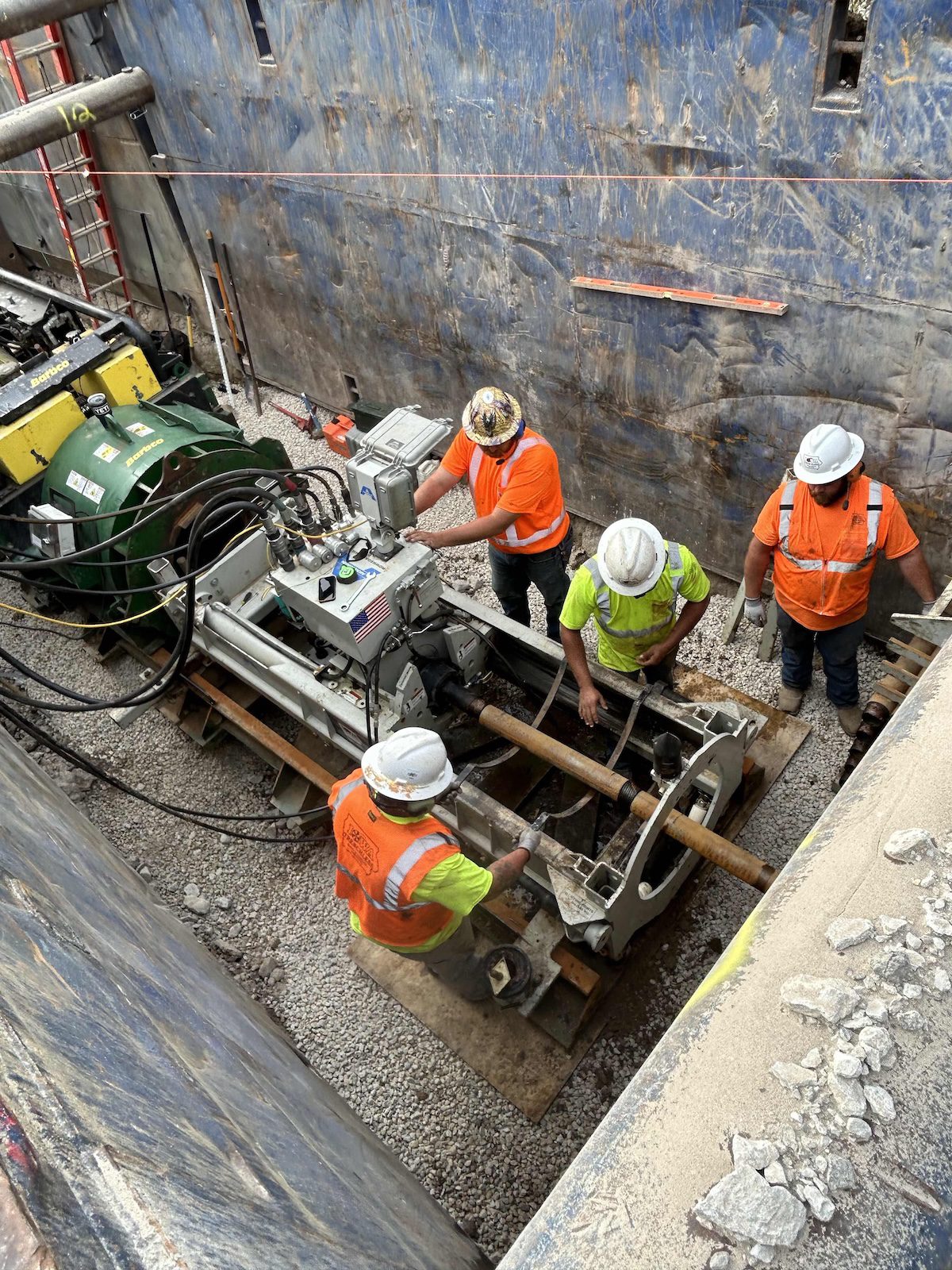
Guided Boring (also known as Pilot-Tube boring) integrates a guided pilot bore system with conventional auger boring or pipe ramming installation methods. A small-diameter pilot tube is first driven with laser/theodolite guidance to establish precise line and grade, then the bore is upsized using reamers while following that pilot tube, enabling installation of steel casings with high positional accuracy.
Guided Pipe Ramming combines pilot-tube guidance with a pneumatic hammer attached to the casing. The successful pilot ensures straight alignment, and then the casing is hammered into place using the rammer to handle tough ground conditions.
Benefits
- Exceptional accuracy: Pilot tubes enable tight control of line and grade, typically within inches.
- Ground adaptability: Works well in mixed soil, pressurized ground, cobbles, or boulders where traditional methods falter.
- Cost-efficient: Smaller casing sizes suffice thanks to accurate alignment, and method is faster and more reliable.
- Minimal disruption: Ideal for urban, rail, and road crossings—no major surface disturbance.
- Enhanced safety: No need for human entry into the bore; fully remote/systematic operation.
Application & Technical Details
- Typical Uses: Installing steel casings under highways, railways, airport runways, waterways, and within congested urban sectors for utility lines, fiber, communications, oil/gas, storm/sanitary sewers.
- Pipe Types: Steel casing is driven, often with welded-on reamer heads for upsizing; carrier pipes (PVC, HDPE, DI, steel) may follow.
- Drive Lengths: Guided boring typically covers 4–48 in OD pipe and up to ~600 ft; large-diameter casings have reached 300–400 ft using sequential upsizing methods (e.g., 24 → 60 in). Guided pipe ramming generally spans 150 ft+ in 20″+ pipe diameters; longer runs possible with staging.
- Equipment & Process:
- Pilot tubes installed first with laser/theodolite guidance.
- For guided boring: reamer or cutting head is attached and casing is jacked/augered.
- For guided pipe ramming: pneumatic hammer pushes casing into place, spoils removed from inside casing after drive.
- Sequential upsizing may be used on large-diameter bores.
- Control & Spoil Management: Precision pilot guides, optional slurry lubricants, and spoil removal via augers or compressed air ensure high-quality, efficient installations.