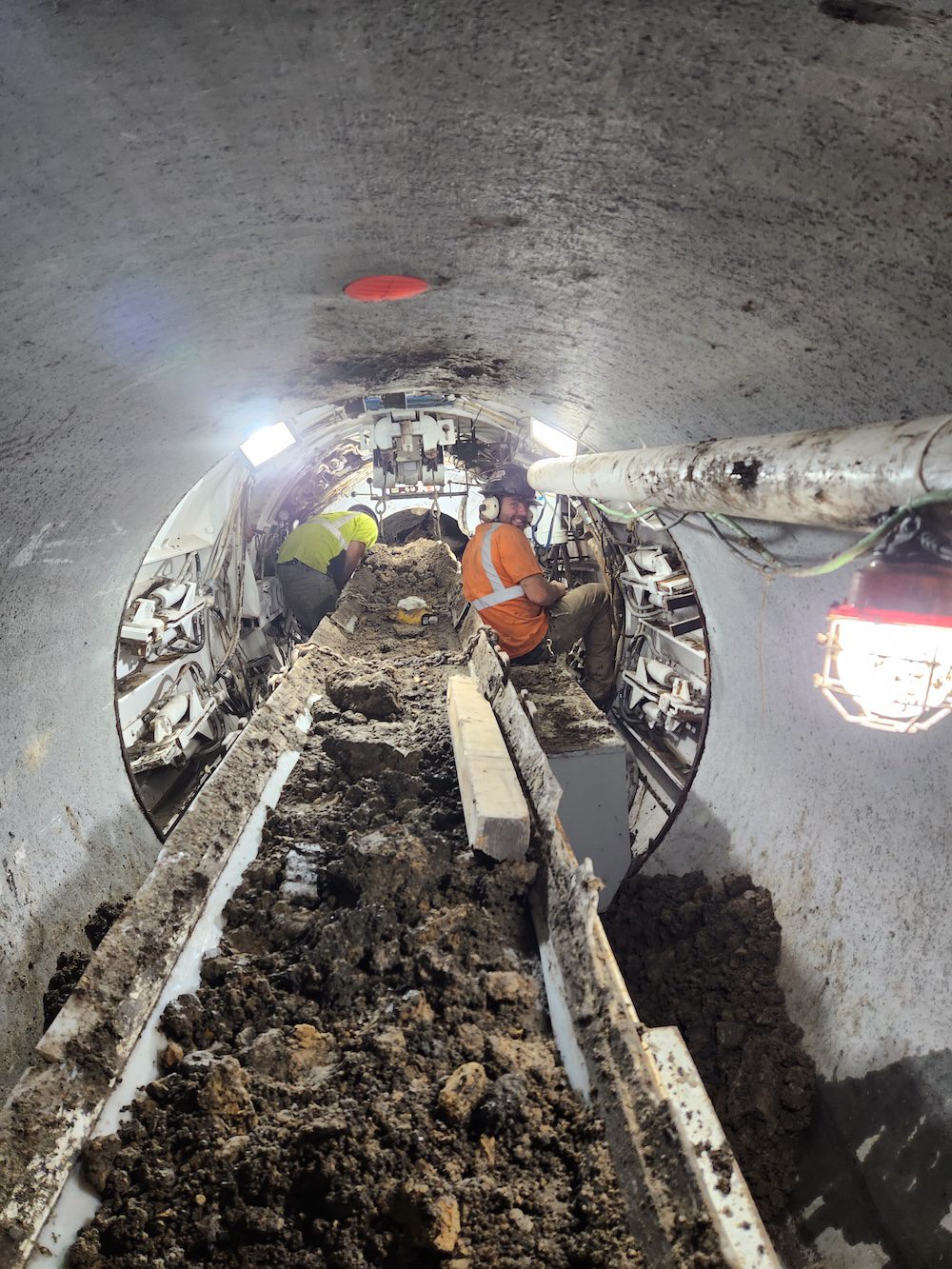
How It Works
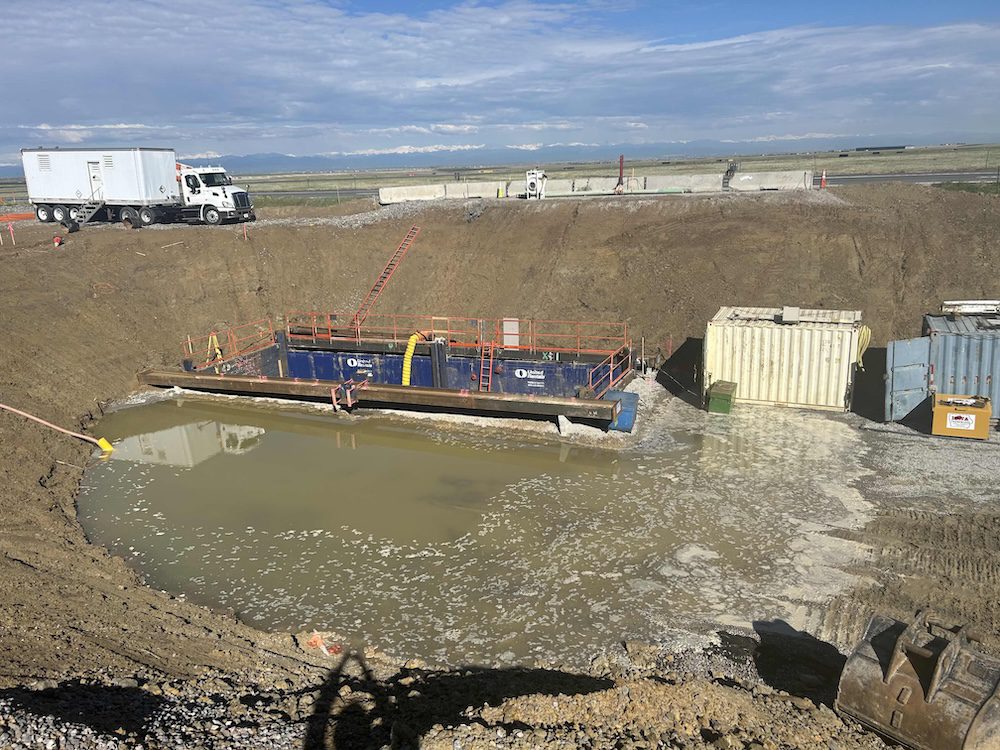
Pipe jacking (TBM) is a trenchless installation method that pushes prefabricated pipe into the ground from a launch shaft while a tunnel boring machine (TBM) excavates ahead of the pipe. The TBM – ranging from open-face excavation shields to closed-face wheel machines and earth pressure balance (EPB) machines – is actively steered to maintain precise line and grade. The finished product is a structurally robust pipeline installed with minimal surface disruption, suitable for deep, long, and high-consequence crossings in urban or environmentally sensitive areas.
Benefits
- Structural Final Product
- The installed pipe is the permanent structure—high stiffness, good load capacity, and durable joints.
- Precision on Line and Grade
- Laser/gyro guidance and TBM steering maintain tight tolerances necessary for gravity systems and complex alignments.
- Long Drives & Large Diameters
- Intermittent Jacking System’s (IJS) and face-support TBM’s (EPB/slurry), the method supports significant distances and large bore sizes.
- Minimal Surface Disruption
- Activity is localized at shafts; roads, rail lines, and communities remain open and functional.
- Groundwater & Geology Flexibility
- Pressurized TBMs and annulus grouting manage inflows, reduce over-excavation, and control settlement.
- Worker Safety
- Operations from the surface reduce exposure to confined space conditions; modern systems include continuous monitoring.
Applications & Technical Details
Pipe jacking (TBM) is selected when projects demand precise alignment, robust structural pipe, and minimal surface impact.
- Gravity Sewers & Storm Drains
- Excellent for tight grade control over long distances at depth.
- Typical drive lengths: 300–1,500 feet per drive; longer drives achievable with IJS (site-specific).
- Pipe types: Reinforced Concrete Pipe (RCP) and Glass-Reinforced Polymer (GRP) jacking pipe are common for rigidity, joint integrity, and strength.
- Diameters: Frequently 24–144 inches, with larger possible depending on TBM and pipe design.
- Water & Pressure Mains
- Ideal where continuous casing and protection are required or where open-cut is infeasible.
- Typical drive lengths: 300–1,200 feet; longer with IJS and favorable ground conditions.
- Pipe types: Steel casing or ductile iron; HDPE/PVC often used as carrier pipes inside a steel or RCP casing for corrosion resistance and hydraulics.
- Critical Crossings (Highways, Rail, Airports, Waterways)
- Allows installation without shutting down or excavating through sensitive corridors.
- Pipe types: Steel casing for added structural protection; RCP/GRP where gravity service and long-term stiffness are priorities.
- Diameters & lengths: Tailored to clearance needs—commonly 36–120+ inches and 600–1,500 feet per drive.
- Deep Urban Utility Corridors
- Reduces risks to adjacent foundations and utilities with controlled face support and real-time monitoring.
- Pipe types: RCP/GRP for gravity systems; steel/ductile iron for pressure applications.
- Drive planning: Incorporates lubrication strategy, IJS spacing, and settlement control to maintain performance in complex soils.
- Additional Technical Considerations
- Pipe Design & Joints: Jacking pipes feature short lengths, robust bells/spigots, and compressible joint gaskets to transmit thrust and maintain watertightness.
- Annulus Control: A designed overcut plus lubrication/grout backfill controls friction and limits settlement.
- Instrumentation & Monitoring: Track jacking loads, advance rates, guidance data, face pressures, and surface settlement to validate assumptions and adapt in real time.
- Construction Sequencing: Plan IJS spacing, lubrication injection points, and TBM maintenance intervals to match geology and drive length.
- QA/QC & Testing: Pre- and post-construction surveys, CCTV or mandrel checks (as applicable), and pressure/leak testing for pressure mains ensure performance.