How It Works
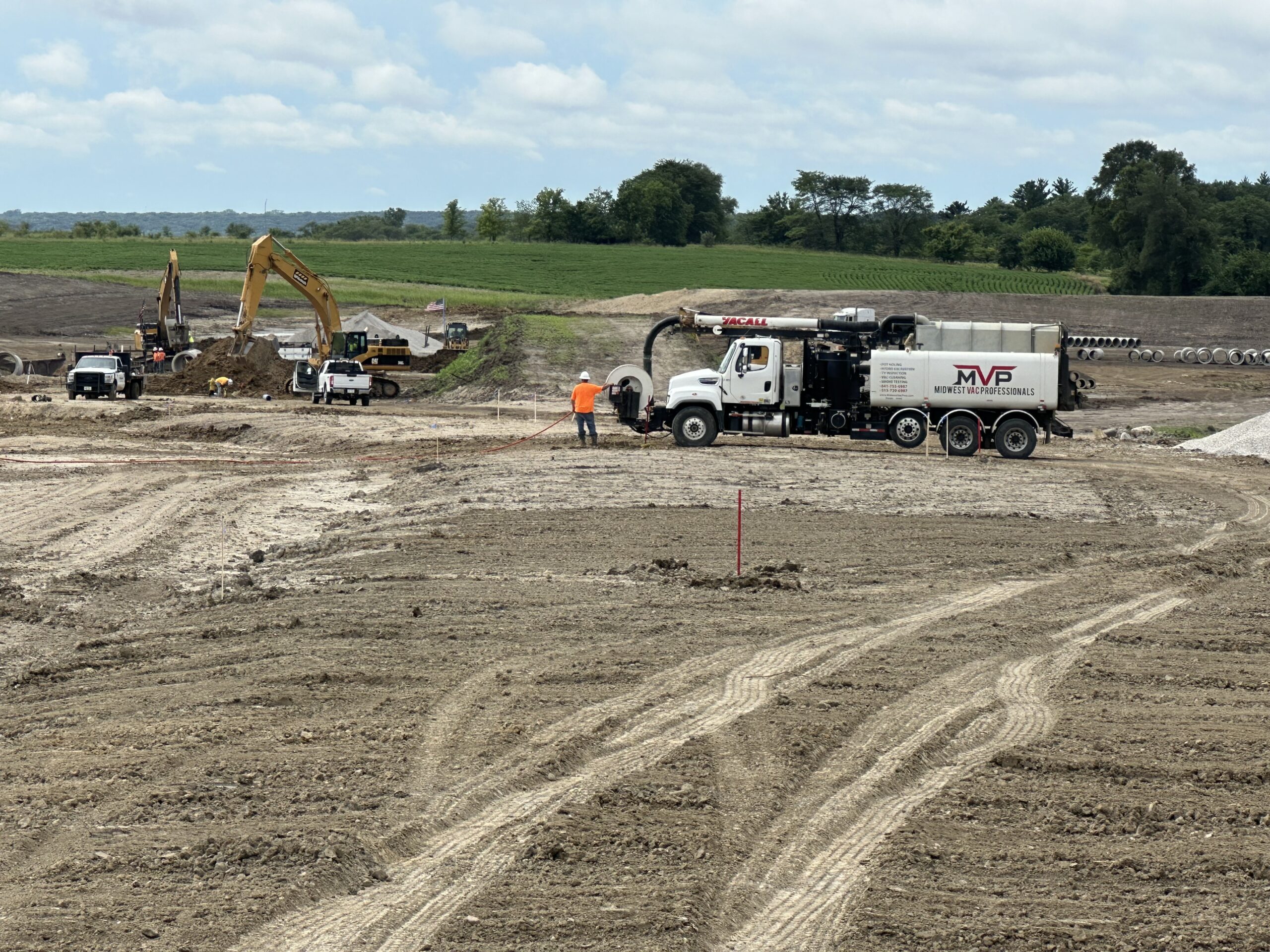
HydroExcavating (hydrovac) uses pressurized water and high-vacuum extraction to expose or remove soil with surgical precision. It’s the safest, most minimally invasive way to daylight utilities, verify depths, cut narrow trenches, and excavate around sensitive structures. Iowa Trenchless deploys modern Vacall hydrovac trucks and trained crews to reduce utility strike risk, control spoils, and keep sites clean and operational with minimal surface disruption.
Benefits
- Non-destructive & utility strike-risk reduction – exposes utilities to full visual confirmation before work proceeds.
- Minimal surface impact – narrow cuts, clean edges, and controlled spoils reduce restoration area and cost.
- Precise – ideal around congested utilities, foundations, culverts, tree roots, and environmentally sensitive areas.
- Fast setup in tight corridors – works from shoulder/ROW with extended hose reach; limited lane closures.
- All-season capability – on-board water heating supports winter excavation and frost penetration.
- Cleaner, safer sites – enclosed debris tanks manage slurry; reduced dust and vibration vs. mechanical digging.
- Documentation-ready – photos/marks for as-builts, depth checks, and utility verification logs.
Applications & Technical Details
Typical uses: utility daylighting/potholing, test holes, service tie-ins, valve box/exercising access, culvert and catch basin cleaning, slot trenching for fiber/electric/low-pressure lines, pole/anchor holes, pit “softening” before mechanical excavation, and around sensitive structures or roots.
- Hole & trench geometry:
– Potholes: commonly 8″×8″ to 12″×12″ (or circular ~10–16″) to target marks.
– Slot trenches: ~4–12″ wide; depth to project need and safe reach. - Production ranges (soil/site dependent):
– Daylighting: ~10–40 test holes/day.
– Slot trenching: ~50–200 ft/day in typical soils; rates vary with utilities, traffic, and spoil handling distance. - Equipment & capabilities:
- Water pressure typically 2,000–3,000 psi at ~8–20 gpm with adjustable nozzles matched to soils.
- On-board heaters enable frost cutting and cold-weather operations.
o Positive displacement blowers deliver high CFM vacuum for rapid spoil removal.
- Debris tanks ~6–12 yd³; water tanks ~1,000–2,000 gal (fleet dependent).
o Reach via suction and pressure hoses for offset excavation from safe staging areas.
- Soils & conditions: effective in sands, silts, clays, and cohesive soils; adjustable pressure, nozzle selection, and dwell times protect utilities and structures.
- Utility locating workflow: coordinate 811 ticketing, field marks, and hydrovac verification to confirm line/depth before mechanical excavation or trenchless work; maintain safe clearance zones per project requirements.
- Traffic & access: compact footprints with shoulder setup, cones/signage, and flagging as required; suitable for urban streets, campuses, industrial plants, and constrained easements.
- Environmental & safety controls:
– Confined-space protocols for vaults/structures; gas monitoring as required.
– Spoil/slurry containment in sealed tanks; disposal at approved facilities or on-site reuse per specifications.
– Erosion/sediment and stormwater BMPs maintained throughout. - QA/QC & deliverables: photo logs, depth readings, utility IDs, and stationing/offset notes; optional GIS-ready CSVs for asset systems and as-built records.
- Restoration: tight excavation limits reduce patch sizes; backfill/compaction and surface restoration performed per owner standards.