
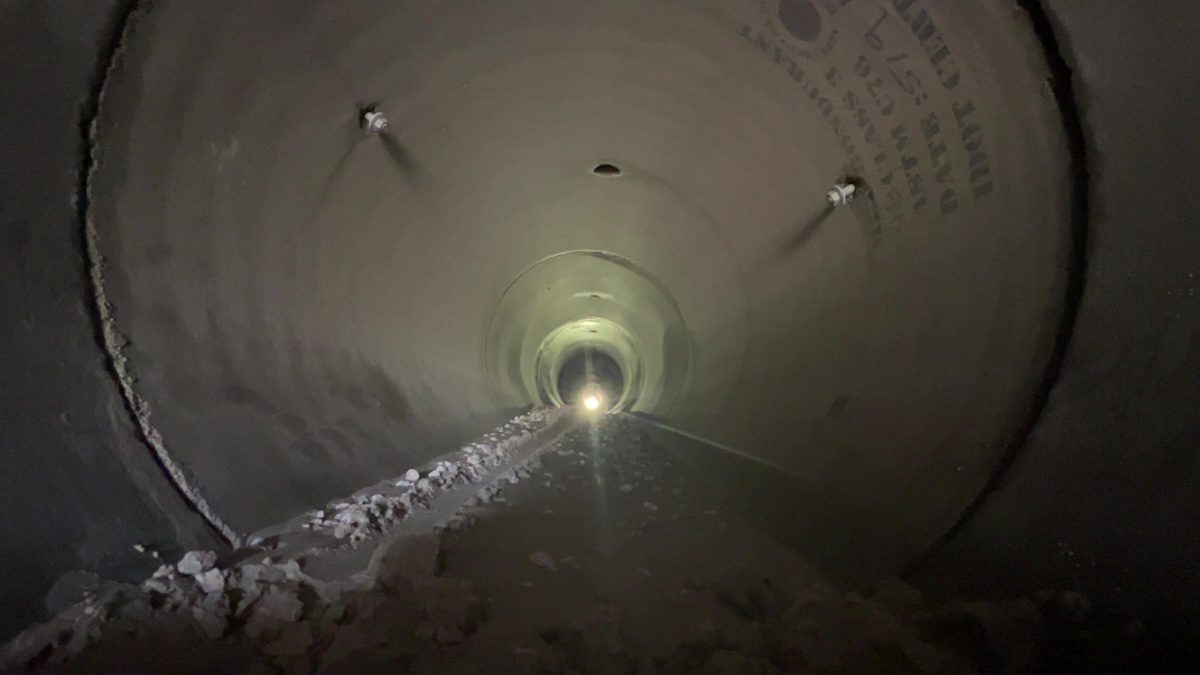
How It Works
Closed-Circuit Television (CCTV) pipe inspections give owners a clear, non-destructive picture of buried infrastructure. Using high-resolution pan–tilt–zoom cameras on crawlers and pushrod systems, Iowa Trenchless documents pipe condition, pinpoints defects to the foot, and delivers NASSCO-coded reports that support maintenance, rehabilitation, and acceptance testing—with minimal surface disruption and a small site footprint.
Benefits
- No-dig condition assessment – evaluate internal pipe condition without excavation or service interruptions in most cases.
- Precise defect locating – identify cracks, fractures, offsets, root intrusions, infiltration, protruding taps, debris, and sags; mark locations from surface.
- Standards-based documentation – NASSCO PACP/MACP coding with videos, stills, and GIS-ready data for planning and compliance.
- Efficient & minimally disruptive – compact setups work under traffic, in easements, and in environmentally sensitive areas.
- Proactive asset management – prioritize repairs and lining, verify post-rehab quality, and reduce emergency failures and costs.
- Safe operations – confined-space, traffic control, and bypass/dewatering handled by trained crews to maintain flow and site safety.
Applications & Technical Details
- Typical uses: condition assessment and acceptance for sanitary and storm sewers, culverts, siphons, interceptor lines, force mains (when taken out of service), detention systems, and industrial process drains; pre-/post-rehabilitation (CIPP, sliplining), SSES/infiltration studies, and routine O&M.
- Pipe diameters: ~2″ to 120″+.
– Pushrod cameras: typically 2″–8″ services and short runs.
– Robotic crawlers: typically 6″–72″+ mains and long culverts. - Reach per setup: manhole-to-manhole segments commonly 200–600 ft; longer runs based on cable length and site conditions.
- Flow & cleaning: optimal with low flow (≤20–30% full). Jet/vac cleaning performed prior to inspection as needed; temporary bypass or dewatering used for surcharged lines.
- Deliverables: HD video (with on-screen distance and clock), defect snapshots, PACP/MACP code summaries, structure-to-structure logs, recommended actions, and optional GIS/CSV shapefiles for asset systems.
- Accuracy & locating: on-screen footage counter with surface sonde locating; defect positions typically marked within inches to a few feet depending on access.
- Equipment & extras:
- Pan–tilt–zoom (PTZ) crawler cameras with auto-leveling and high-output lighting.
- Lateral launch from mainlines to 4″–6″ services for cross-bore and tap inspections.
- Pushrod cameras with integrated sondes for tight bends and small-diameter services.
- Laser profiling (ovality, diameter loss, joint gap) and optional sonar profiling for submerged segments.
- Manhole scanning and MACP documentation to complement mainline reports.
- Traffic control, confined-space entry, gas monitoring, and site restoration as required.
- Acceptance & rehab support: pre-construction baseline, post-cleaning verification, post-rehab acceptance (liner/wrinkle/blister checks, end seals, reinstated laterals), and defect grading to prioritize spot repairs vs. lining.
- Data integration: report packages tailored for engineers and asset managers—PACP databases, PDFs, MP4s, and map layers compatible with common GIS/CMMS platforms.