How It Works
Cellular grouting provides a lightweight, flexible, and highly pumpable solution for filling voids and stabilizing underground installations. With customizable mixes tailored to soil conditions, hydrostatic demands, and project scale, it’s a go-to method for secure, non‑destructive annular and void filling across sliplines, tunnels, casings, and rehabilitation works.
Benefits
- Low density – approximately one-third to one-half the weight of standard grout, significantly reducing buoyancy effects and minimizing conduit flotation or deflection.
- High fluidity – easily fills irregular voids without mechanical consolidation, requiring less pressure and lowering collapse risk.
- Stress-adaptive properties – structural flexibility enables it to absorb ground movement without overstressing the carrier pipe.
- Efficient pumping – improved pumpability reduces equipment and time needed for installation.
Applications & Technical Details
- Common uses:
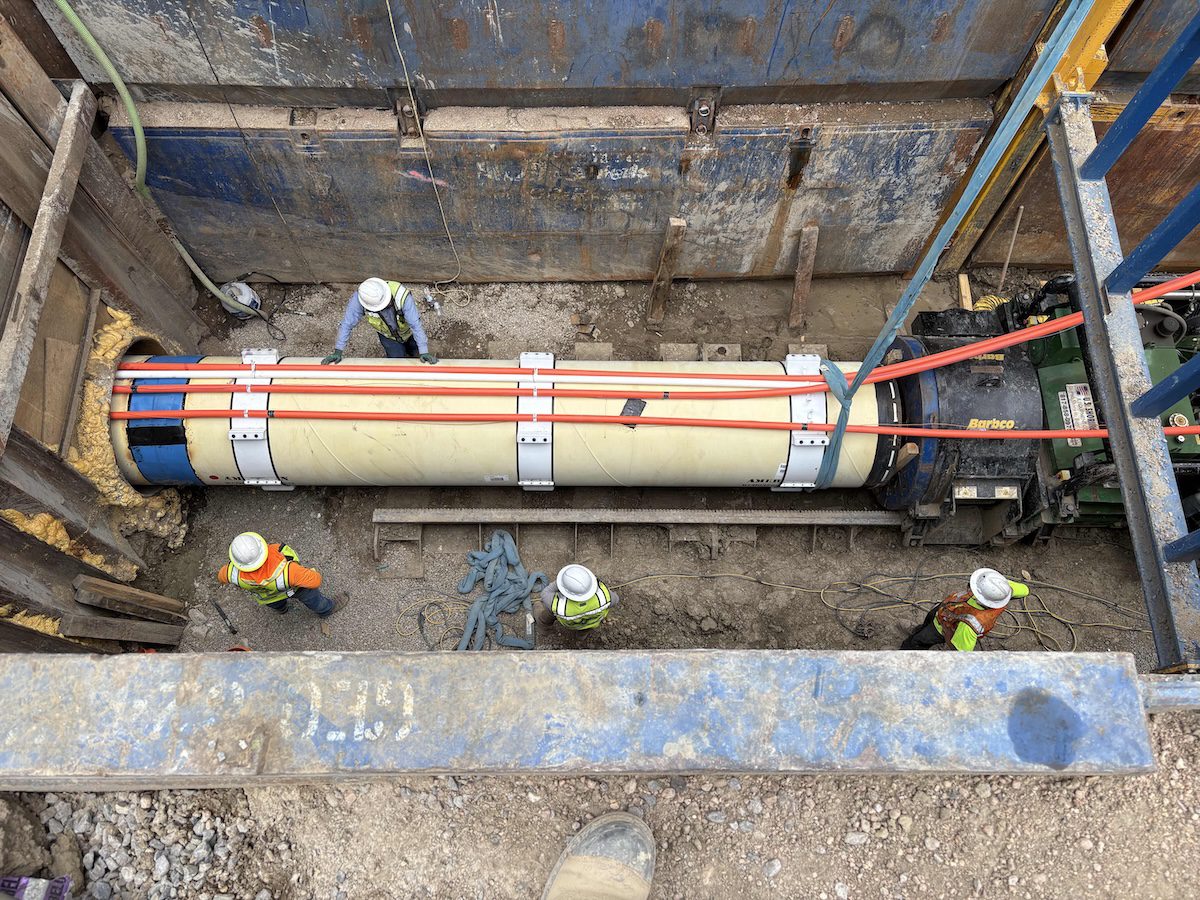
- Backfilling the space around newly installed carrier pipes in tunnels, casings, and sliplining projects.
- Stabilizing voids in abandoned tunnels and beneath roadways or structures—especially in urban or civic emergency repair settings.
- Pipe types: Used with steel casings, lined tunnels, segmental concrete carriers, HDPE, PVC, fiberglass, and more.
- Drive lengths: Compatible with broad installation lengths—from short sliplines to long drives exceeding 2,000 ft—as grout pressure can be tailored to installation conditions.
- Other details:
- Typically pumped under low pressure, ideal for environments with sensitive underground conditions.
- Density and mix can be adjusted depending on project needs, such as void depth or surrounding hydrostatic pressure.
- Frequently used in conjunction with grouting bulkheads and positive seals in dam or hydro projects.