
How It Works
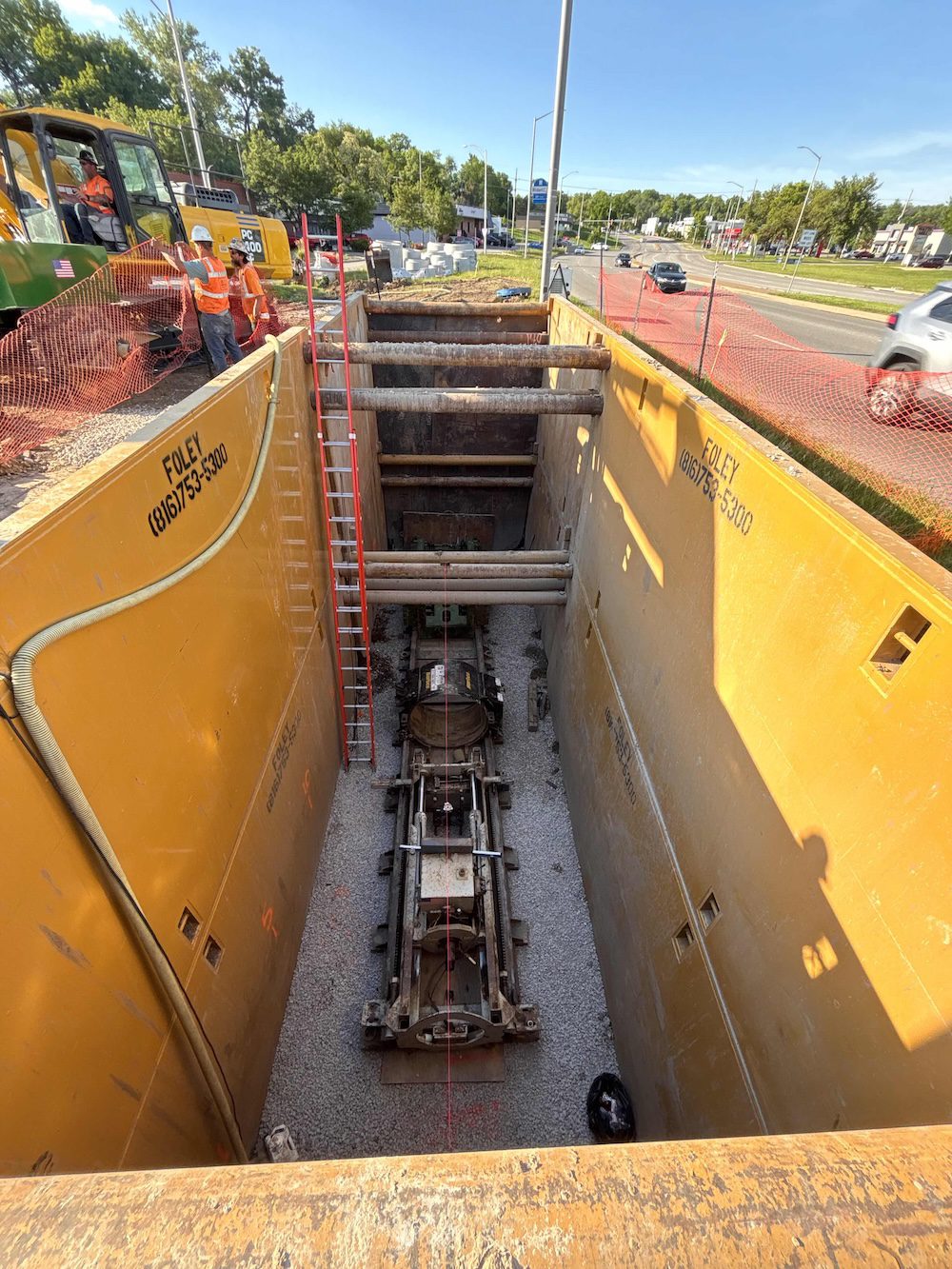
Auger boring is a cost‑effective, minimally invasive trenchless solution for installing steel-cased utilities beneath obstacles. With casing sizes up to 84″ and drives extending several hundred feet, enhanced by modern guidance and cutter technologies, it is a reliable go-to for under‑crossings with tight surface and accuracy constraints.
Benefits
- High surface preservation – minimal disruption to roads, railways, landscapes, and structures.
- Reliable and proven – straightforward process with strong track record and low operational cost.
- Versatile – works in soils, clays, even rock using cutter heads or Small Boring Units.
- Accurate – modern pilot tube guidance systems effectively control line and grade.
- Safe and efficient – auger boring is non‑explosive and well-suited for crossings in busy urban or environmentally sensitive sites.
Application & Technical DEtails
- Typical uses: ideal for under‑crossings of highways, railroads, airport runways, storm sewer, water, gas, electrical, fiber, and communications lines.
- Casing diameters: commonly ranges from ~4″ to 84″, with typical steel casing sizes between 12″ and 72″.
- Drive lengths: standard bores are 100–500 ft; lengths up to ~400 ft are routine, especially using pilot‑tube guidance, and even longer with specialized setups.
- Pipe types: steel casings house carrier pipes (PVC, HDPE, ductile iron, steel), installed after casing is jacked into place.
- Equipment & extras:
- Small Boring Units (SBUs) attach to a lead casing for small drives (24–66″) and rock conditions.
- Pilot tube systems offer enhanced precision by pre-installing guided tubes on line and grade.
- Cutter heads (roller cone, disc) and slurry or water flush are used in rock and cohesive soils.
- Typical pit sizes: 40–60 ft long by ~14 ft wide, with thrust walls, torque plates, dewatering, and spoil handling measures.
- Tolerances: horizontal and vertical alignment within about ±3″; overcut typically ≤1″ annular space.