How It Works
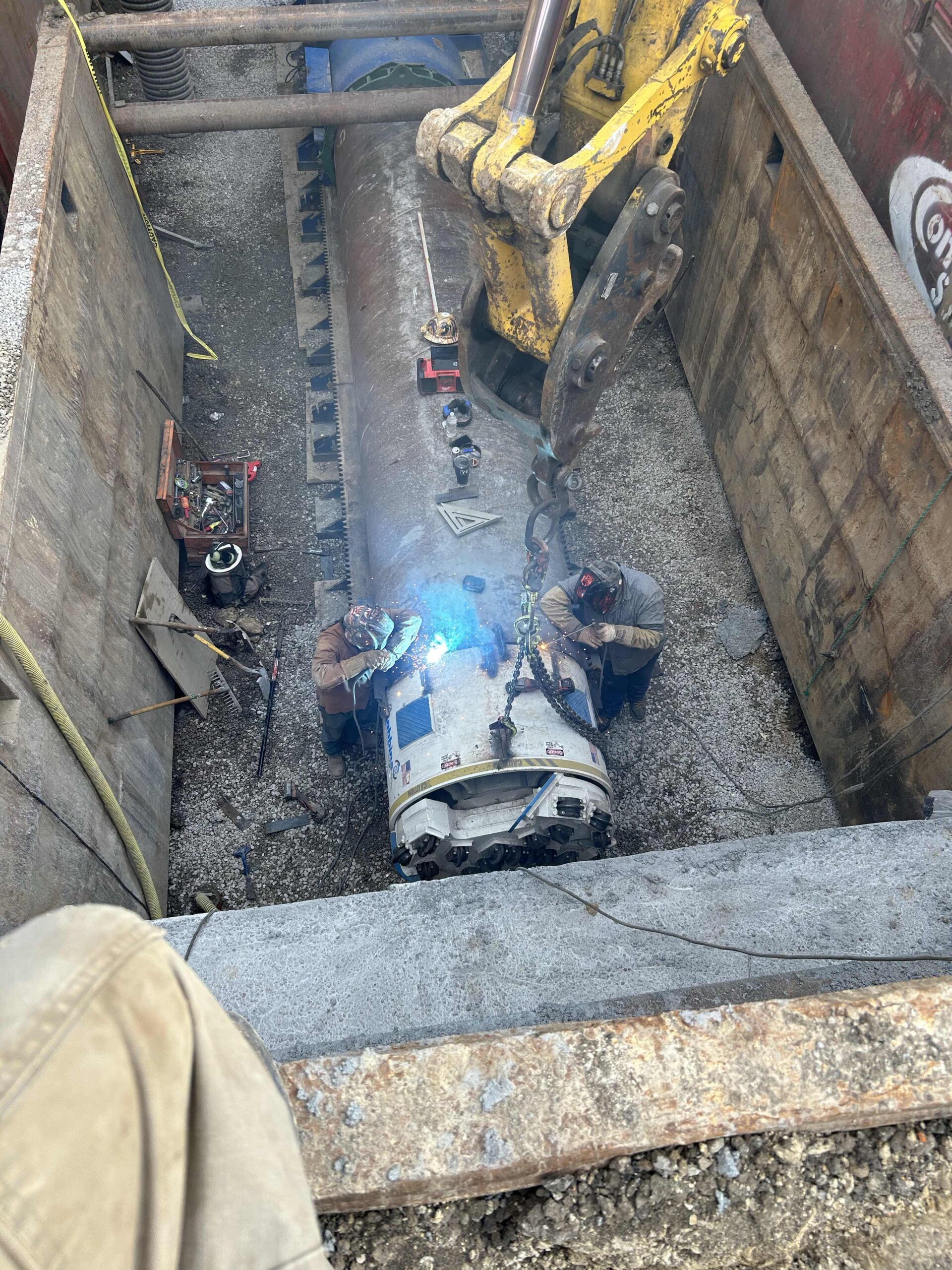
Rock boring and tunneling offers a durable, surface-sparing solution for drilling through rock. By using precision-tailored cutting technologies, from auger-mounted rock heads to high-capacity TBM’s, this method achieves steady, cost-effective tunneling ideal for a broad range of civil and utility infrastructure projects. It adapts to varying tunnel sizes and geological conditions through geological analysis and machine customization.
Benefits
- Consistent and predictable production – rock’s stable nature enables steady advance rates.
- Minimal surface impact – entirely underground work preserves roads, structures, and ecosystems.
- Custom-engineered equipment – tunneling machines and cutting heads are designed for specific geology, optimizing performance.
- Versatility in method – suitable for both small-diameter auger‑based bores and large‑diameter TBMs depending on project scope.
Applications & Technical Details
- Typical uses: constructing tunnels for water mains, sewers, storm drains, utilities, dams, rail, and road crossings—all through rock.
- Machine types:
- Auger boring with disc‑cutting rock heads for smaller drives.
- Tunnel Boring Machines (TBMs) for larger tunnel diameters.
- Drive lengths: generally limited by machine and geology, but custom setups allow hundreds of feet in solid rock.
- Pipe types: steel casings or concrete/segmental liners are typical; in some stable rock, full-face lining may be unnecessary.
- Geotechnical design: Contractor and Engineering teams analyze compressive strength and abrasiveness to select cutting head design and machine specs.
- Shafts & handling: launch and reception shafts support machine setup, excavation, spoil removal, and final lining or pipe installation.