How It Works
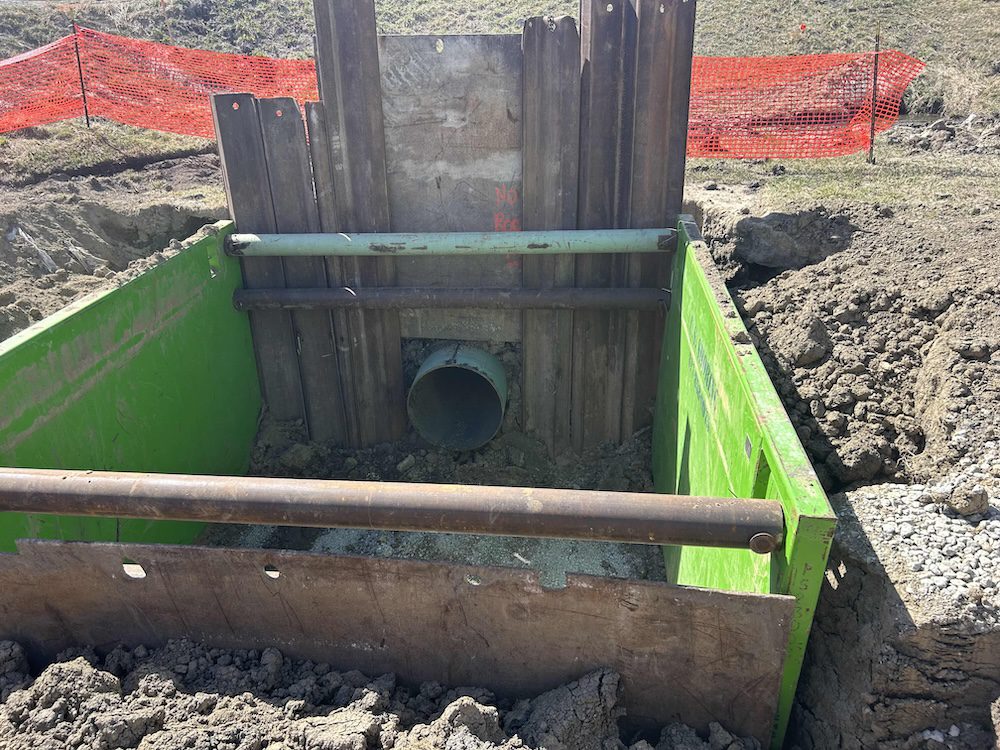
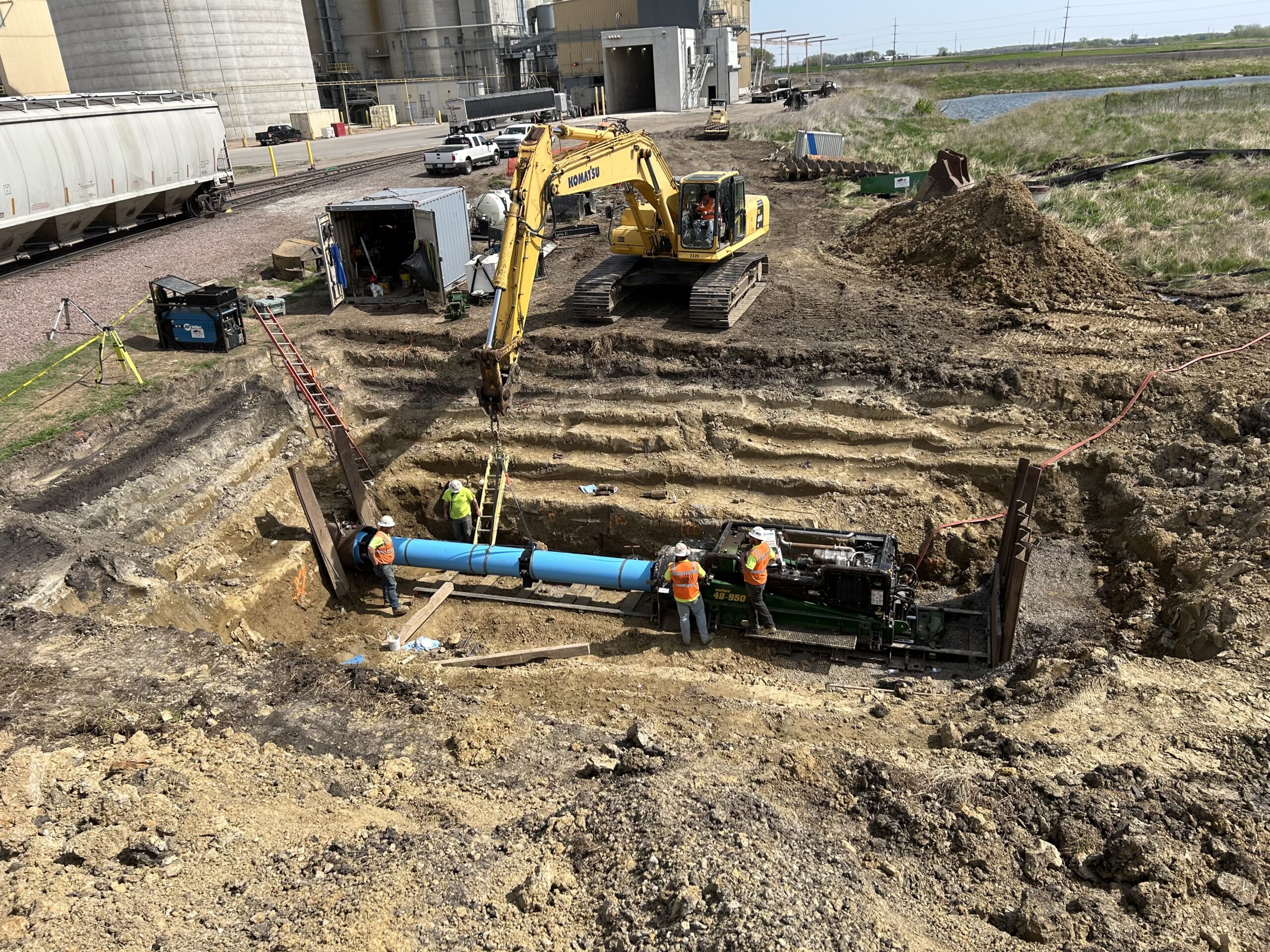
Shaft construction in trenchless projects involves excavating vertical (or occasionally inclined) access shafts—known as launch, reception, or drop shafts—to support tunneling and pipe-boring operations. These shafts provide essential space for equipment like jacking frames, boring machines, and shaft liners, as well as safe access for installation activities such as spoil removal, dewatering, and ventilation. Common support methods include liner plates, soldier‐beam and lagging systems, and steel sheet piling or trench safety boxes, selected based on soil type, groundwater, and project depth. Engineered shoring systems are used to reinforce more challenging and deeper shafts, using slide rail shoring systems.
Iowa Trenchless is well-equipped and trained to furnish OSHA compliant and safe excavations including bore pits, utilizing sloping and benching techniques, or our inventory of trench boxes and slide rail systems to ensure jobsite safety. Well-designed shafts are the backbone of trenchless operations—enabling safe, efficient, and precise underground installations. By custom-fitting supports, dewatering, and access features, shaft construction ensures projects proceed smoothly across varying depths, soils, and installation methods—from microtunneling to pipe jacking and beyond.
Benefits
- Minimized surface disturbance: All major excavation is confined to the shaft, preserving surrounding roads, utilities, and landscapes.
- Enables deep and large-scale operations: Allows reliable installation of heavy tunneling machinery and supports deep bores that would otherwise be impractical via open cut.
- Enhanced safety controls: Engineered walls, dewatering, and trench supports create a secure environment for both workers and equipment.
- Flexible and adaptable design: Shaft systems can be customized for varying depths, groundwater conditions, and support requirements, and are often installed in sections.
Applications & Technical details
- Common uses: Serve as launch and reception points for methods like microtunneling, TBM, pipe jacking, guided boring, auger boring, and pipe ramming.
- Pipe & lining compatibility: Facilitate installation of steel casing, segmental concrete liners, jacking pipes, and slurry systems. They also support dewatering and slurry separation during pipe installation.
- Drive lengths enabled: Support everything from short drives (<100 ft) to long-distance bores (over 1,000 ft), especially with mid-line jacking stations.
- Construction methods & features:
- Excavation supported by liner plates, soldier beams & lagging, steel sheeting/trench boxes depending on soil profiles.
- Includes dewatering systems, spoil handling logistics, and space for reaction frames or jack assemblies.
- Shaft pits are dimensioned to fit equipment, ensure safety, and maintain stability under adjacent structures.
- Design must consider nearby utilities, geology, water table depth, and duration of use.