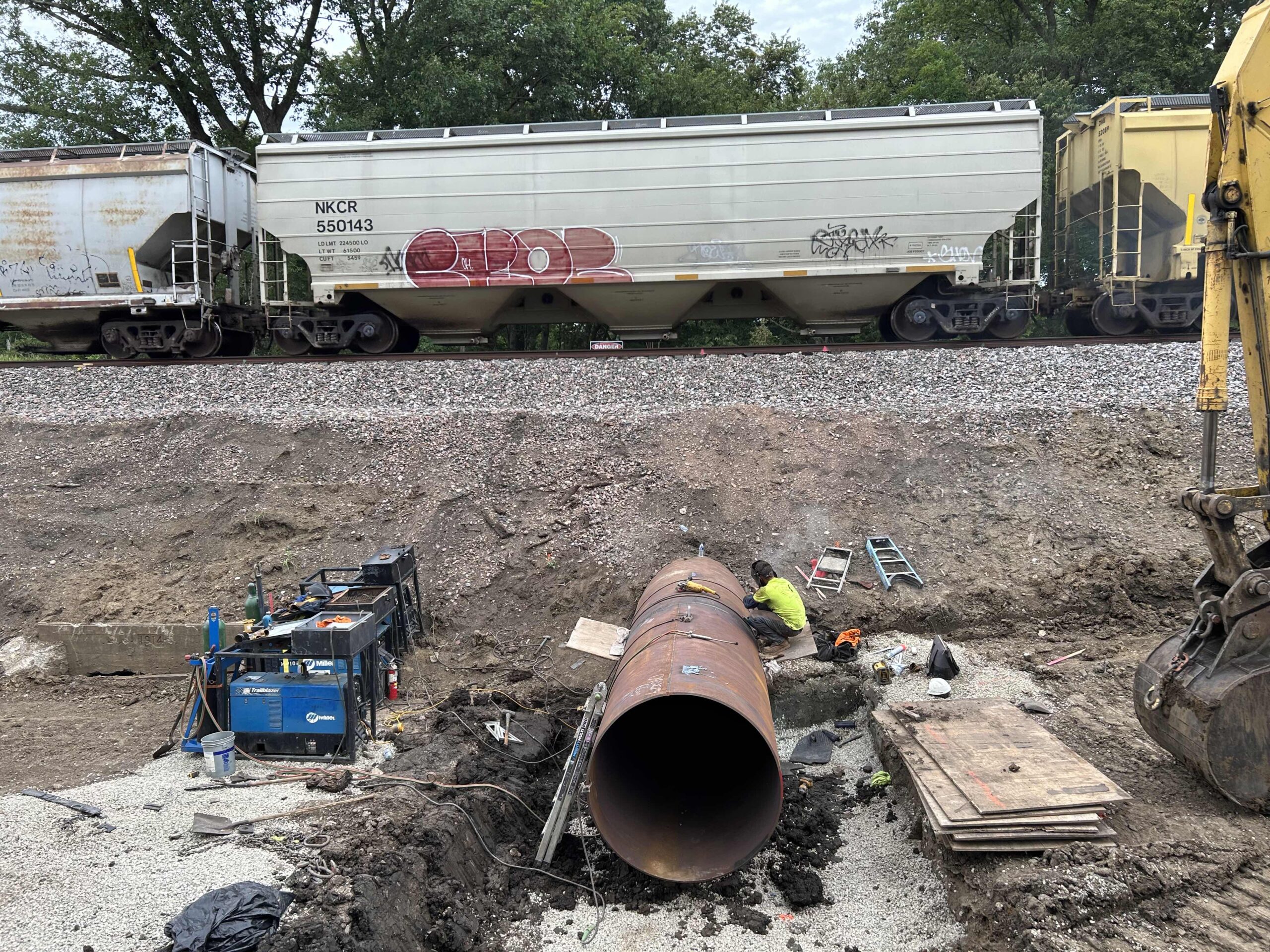
How It Works
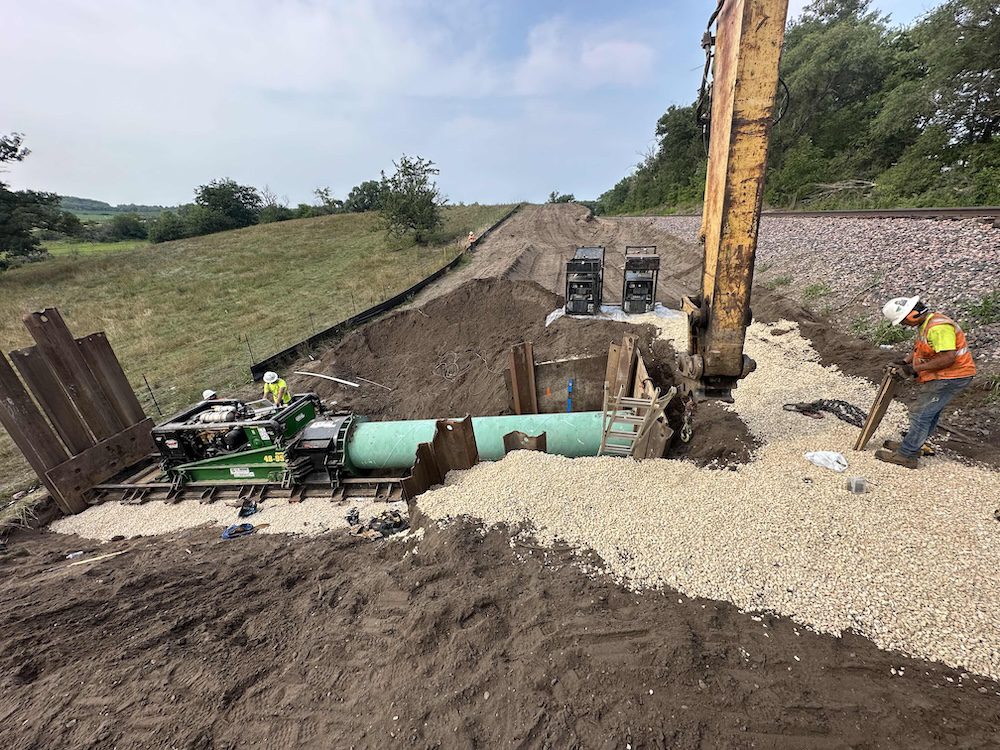
Trenchless railroad crossings provide a safe, efficient, and compliant way to bring utilities beneath rail corridors without disrupting train service or damaging track infrastructure. By using precise trenchless tools, structural casing, and rigorous monitoring aligned with AREMA (American Railway Engineering and Maintenance-of-Way Association) and NUCA (National Utility Contractors Association) standards, these projects ensure operational continuity, ballast integrity, and regulatory conformity.
Benefits
- Uninterrupted rail service – permits installation beneath live tracks with zero train delays or closures.
- Reduced surface and ballast impact – avoids digging up ballast and removes minimal spoil, preserving track stability.
- Regulatory alignment – follows updated AREMA guidelines that call out safety, shoring, grounding, and casing requirements.
- Flexible installation methodology – contractors tailor methods (e.g., HDD for flexible alignment, auger/pilot for accuracy, pipe ramming for aggressive soil) based on geology and site constraints.
Application & Technical Details
- Typical utilities: gas, water, sewer, stormwater, electric, telecom, and fiber lines frequently cross railroads via trenchless installation.
- Pipe types & casing: steel casings (often thick-wall for structural resistance and ballast protection) with carrier pipes inside—materials include steel, HDPE, PVC, DI—designed according to API RP 1102 and AREMA stipulations.
- Drive lengths & diameters: typical drives range from 100–600 ft, depending on track width and guidance method; pipe diameters span 4″ to over 60″ (e.g., culverts up to 48″ HDD, Geonex DTH up to 48″, hydro hammer methods for even larger installations).
- Support systems: use pilot tubes, laser guidance, soil plug control, surface monitoring, and shoring in accordance with AREMA practices; pre-bore geotech borings guide soil plug length and ballast integrity.
- Contractor track record: Iowa Trenchless routinely installs utilities under active tracks without interruption; we have completed hundreds of successful crossings using auger boring, pipe ramming, guided auger boring and guided pipe ramming, tunneling, and HDD trenchless installation methods..